

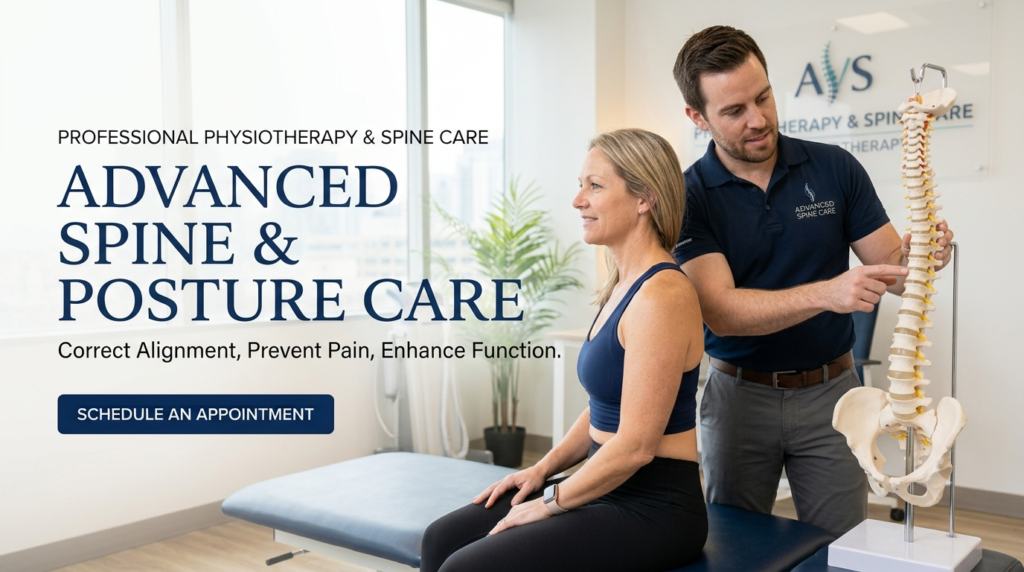
Spine & Posture Care
Spine & Posture Care focuses on maintaining healthy spinal movement, improving body mechanics, strengthening supporting muscles and developing practical habits that make everyday movement more comfortable.
Good posture does not mean holding your body rigidly in one “perfect” position. Current physiotherapy guidance emphasizes changing positions regularly, staying active and finding comfortable, sustainable movement patterns.
What Is Spine & Posture Care?
Spine & Posture Care is a preventive and rehabilitative approach designed to support the health and function of the spine.
It may include:
- Posture assessment
- Mobility exercises
- Muscle strengthening
- Core and trunk conditioning
- Flexibility exercises
- Ergonomic guidance
- Movement retraining
- Manual therapy when clinically appropriate
- Education about lifting, sitting and daily activities
- Rehabilitation after injury
The goal is not simply to “sit straight.” Instead, spine care aims to help you move comfortably, maintain physical capacity and reduce factors that may contribute to recurring discomfort.
Why Is Spine Care Important?
The spine works throughout the day—even when you are sitting, standing, walking or sleeping.
Activities such as:
- Sitting at a desk for many hours
- Working on a laptop
- Looking down at a phone
- Driving for long periods
- Repeated bending
- Lifting or carrying objects
- Standing for prolonged periods
- Returning to exercise after a long break
can place different demands on the muscles and joints around the spine.
Regular movement and physical activity are important components of maintaining function and managing many types of low back pain. WHO guidance also emphasizes rehabilitation, exercise and self-management for low back pain.
Common Spine & Posture Problems
Spine and posture-related concerns can affect different areas of the body.
1. Neck Pain
Neck discomfort may be associated with prolonged computer use, phone use, repetitive activities, muscle tension or reduced neck mobility.
Symptoms may include:
- Neck stiffness
- Pain while turning the head
- Upper shoulder tightness
- Head or neck discomfort
- Reduced range of motion
2. Upper Back Pain
Upper-back discomfort can sometimes occur after prolonged sitting, repetitive work or sustained positions.
It may be accompanied by:
- Tightness between the shoulder blades
- Muscle fatigue
- Shoulder stiffness
- Discomfort after prolonged computer work
3. Lower Back Pain
Lower back pain is extremely common. WHO reports that low back pain affects hundreds of millions of people globally and is a major cause of disability.
Possible contributing factors include:
- Reduced physical activity
- Muscle deconditioning
- Repetitive physical work
- Prolonged sitting
- Previous injury
- Certain medical conditions
Importantly, not every episode of back pain has an identifiable structural cause. WHO notes that most low back pain is classified as non-specific.
4. Postural Imbalance
A person may develop habits such as:
- Rounded shoulders
- Forward head position
- Slouched sitting
- Uneven standing
- Excessive sitting
- Reduced movement
These patterns do not automatically mean that damage is occurring. However, if a particular position consistently causes discomfort or limits activity, assessment may be helpful.
Does Poor Posture Cause Back Pain?
The relationship between posture and pain is more complicated than simply saying “bad posture causes back pain.”
There is no universally perfect sitting or standing posture, and research-based physiotherapy guidance does not establish that one particular posture directly causes back pain in everyone.
However, posture can influence how comfortable you feel, particularly when you remain in the same position for a long time.
What Does Spine & Posture Care Include?
A personalized program may include several components.
1. Posture Assessment
A physiotherapist may assess:
- Head and neck position
- Shoulder position
- Spinal movement
- Pelvic alignment
- Muscle flexibility
- Strength
- Balance
- Movement patterns
- Work and daily-life habits
The assessment helps identify factors that may be contributing to discomfort or movement limitations.
2. Mobility Exercises
Gentle mobility exercises can help maintain or improve movement in the spine and surrounding joints.
Depending on the individual’s condition, exercises may target:
- Neck mobility
- Thoracic spine mobility
- Lower-back movement
- Hip mobility
- Shoulder movement
Exercises should be selected according to the person’s symptoms and physical condition rather than following a one-size-fits-all routine.
3. Strengthening Exercises
Strong muscles around the trunk, hips, shoulders and legs can help support everyday movement.
A rehabilitation program may include exercises for:
- Abdominal and trunk muscles
- Back muscles
- Gluteal muscles
- Hip muscles
- Shoulder and upper-back muscles
- Leg muscles
Exercise-based rehabilitation is an important component of managing many forms of low back pain.
4. Flexibility & Stretching
Limited flexibility may affect movement and comfort.
Depending on individual needs, a program may incorporate stretches for:
- Hamstrings
- Hip flexors
- Calves
- Chest muscles
- Upper back
- Neck and shoulder muscles
Stretching should be comfortable and should not force painful movement.
5. Ergonomic Guidance
Your workstation and daily environment can influence how long you can comfortably maintain a position.
Useful considerations include:
- Keeping your screen at a comfortable viewing height
- Supporting your lower back if needed
- Keeping frequently used objects within easy reach
- Avoiding prolonged static positions
- Taking regular movement breaks
- Adjusting your chair, desk or workstation to suit your body
The goal is not to maintain one rigid posture all day. Changing positions regularly is an important part of comfortable movement.
Benefits of Spine & Posture Care
A well-designed spine-care program may help with:
- Improved mobility
- Better physical conditioning
- Increased muscle strength
- Improved movement confidence
- Better awareness of body mechanics
- Reduced stiffness
- Improved ability to perform daily activities
- Better management of recurring musculoskeletal discomfort
For persistent low back pain, WHO recommends a holistic approach that can include education, exercise and appropriate physical therapies rather than relying on a single intervention.
Frequently Asked Questions
1. What is Spine & Posture Care?
It is an approach that focuses on spinal mobility, muscle strength, movement habits, ergonomics and rehabilitation to support comfortable everyday movement.
2. Can poor posture cause back pain?
Posture can influence comfort, but there is no single “bad posture” that causes pain in everyone. Regular movement and changing positions are important.
3. Is sitting for long hours bad for the spine?
Remaining in the same position for prolonged periods can contribute to stiffness and discomfort. Regular movement breaks and physical activity can help.
4. Can physiotherapy improve posture?
Physiotherapy can help improve movement awareness, strength, flexibility and functional habits. The outcome depends on the individual’s underlying condition and consistency with the program.
5. Which exercises are good for spine health?
Walking, mobility exercises, strengthening and flexibility exercises may be useful depending on the individual. A physiotherapist can select appropriate exercises based on assessment.
6. Can Spine & Posture Care help office workers?
Yes. A program may address prolonged sitting, workstation setup, movement habits, muscle conditioning and exercise.