

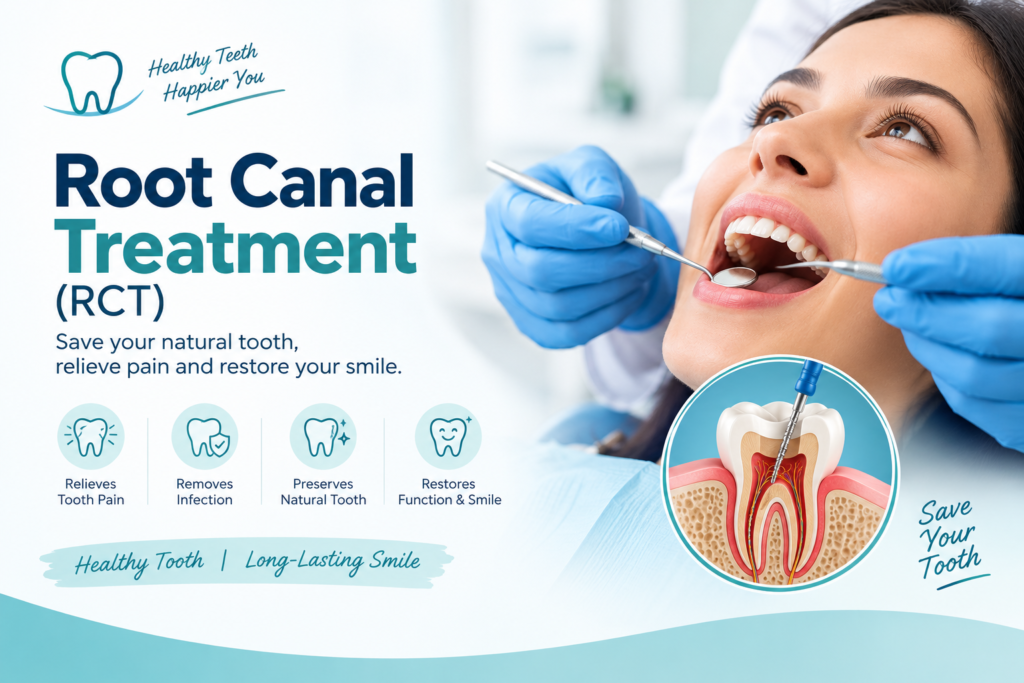
Root Canal Treatment (RCT)
A root canal treatment, also known as endodontic treatment, is a dental procedure used to treat infection or inflammation inside a tooth. At Vandana Multi Speciality Clinic, we focus on providing careful, comfortable and personalized dental care based on the condition of your tooth.
What Is Root Canal Treatment?
Inside every tooth is a soft tissue called the dental pulp, which contains nerves and blood vessels. Deep tooth decay, cracks, trauma or repeated dental procedures can damage or infect this tissue.
During root canal treatment, the dentist:
- Removes the infected or inflamed pulp
- Cleans and disinfects the root canals
- Shapes the canals for proper filling
- Fills and seals the cleaned canals
- Restores the tooth with an appropriate filling or crown when required
The goal is to eliminate infection, protect the tooth from further infection and allow the natural tooth to continue functioning.
When Do You Need a Root Canal?
Your dentist may recommend RCT when the pulp inside your tooth is infected or irreversibly damaged.
Common causes include:
- Deep tooth decay
- Cracked or fractured teeth
- Dental trauma or injury
- Repeated dental procedures on the same tooth
- Infection or dental abscess
- Damage to the pulp caused by extensive decay or previous treatment
Sometimes a tooth requiring root canal treatment may not cause obvious pain, which is why a dental examination is important when symptoms persist.
Symptoms That May Indicate You Need RCT
You should consider a dental evaluation if you experience:
- Persistent or severe toothache
- Pain while chewing or biting
- Prolonged sensitivity to hot or cold
- Swelling or tenderness around the tooth
- A recurring pimple or swelling on the gum
- A cracked or chipped tooth
- Tooth discoloration
- Symptoms associated with a dental abscess
Not every toothache requires a root canal. A dentist needs to examine the tooth and determine the underlying cause before recommending treatment.
How Is Root Canal Treatment Done?
Root canal treatment generally involves several stages.
1. Dental Examination
Your dentist examines the affected tooth and may use dental X-rays or other diagnostic methods to understand the extent of the problem.
2. Local Anaesthesia
Local anaesthesia is used to numb the area around the affected tooth so that the procedure can be performed comfortably.
3. Accessing the Tooth
A small opening is made in the tooth to reach the infected or inflamed pulp and root canal system.
4. Cleaning & Shaping
The damaged pulp is removed, and the root canals are carefully cleaned, disinfected and shaped.
5. Filling & Sealing
The cleaned canals are filled and sealed to help prevent bacteria from entering again.
6. Final Restoration
Depending on the amount of tooth structure remaining, your dentist may recommend a filling, crown or another suitable restoration to protect the treated tooth.
The number of appointments varies depending on the tooth, infection and complexity of the case.
Benefits of Root Canal Treatment
When a tooth can be successfully treated and restored, RCT can offer several benefits:
- Preserves your natural tooth
- Helps eliminate infection inside the tooth
- Helps relieve pain caused by infected or inflamed pulp
- Allows the tooth to continue supporting normal chewing
- Avoids extraction when the tooth is suitable for preservation
- Can restore the appearance and function of the affected tooth
Saving a natural tooth can also avoid the need to replace a missing tooth with options such as a bridge or dental implant.
What Happens After Root Canal Treatment?
Some tenderness or sensitivity may occur after the procedure and generally improves as the area heals. Your dentist will provide instructions based on your individual treatment.
After RCT:
- Follow your dentist’s post-treatment instructions
- Avoid chewing hard foods on the treated tooth until advised
- Maintain regular brushing and flossing
- Attend the recommended follow-up appointment
- Complete the final restoration, such as a crown, when recommended
A properly restored tooth can continue to function like a natural tooth.
Frequently Asked Questions About
Can a root canal save my tooth?
In many cases, root canal treatment can preserve a natural tooth that would otherwise require extraction. Whether your tooth is suitable for RCT depends on its condition and should be determined through a dental examination.
How many visits are required for RCT?
The number of visits varies. Some cases may be completed in one or two appointments, while complicated infections or teeth may require additional treatment.
Will I need a crown after RCT?
A crown may be recommended when the treated tooth has significant loss of tooth structure or requires additional protection. Your dentist will assess the tooth and recommend the appropriate restoration.
Can I go to work after a root canal?
Many patients can return to their normal activities after treatment, depending on the procedure and how they feel. Your dentist can provide personalized advice.
What happens if I don’t get a root canal when it is needed?
An untreated infection inside a tooth can persist or spread and may eventually result in an abscess or tooth loss. Prompt dental evaluation is advisable when you have persistent tooth pain, swelling or other concerning symptoms.
Is root canal treatment better than extraction?
These are different treatments, and the appropriate choice depends on whether the tooth can be predictably restored. If a tooth can be successfully treated and restored, RCT provides a way to retain the natural tooth. Your dentist can explain the benefits and limitations of each option for your particular case.