

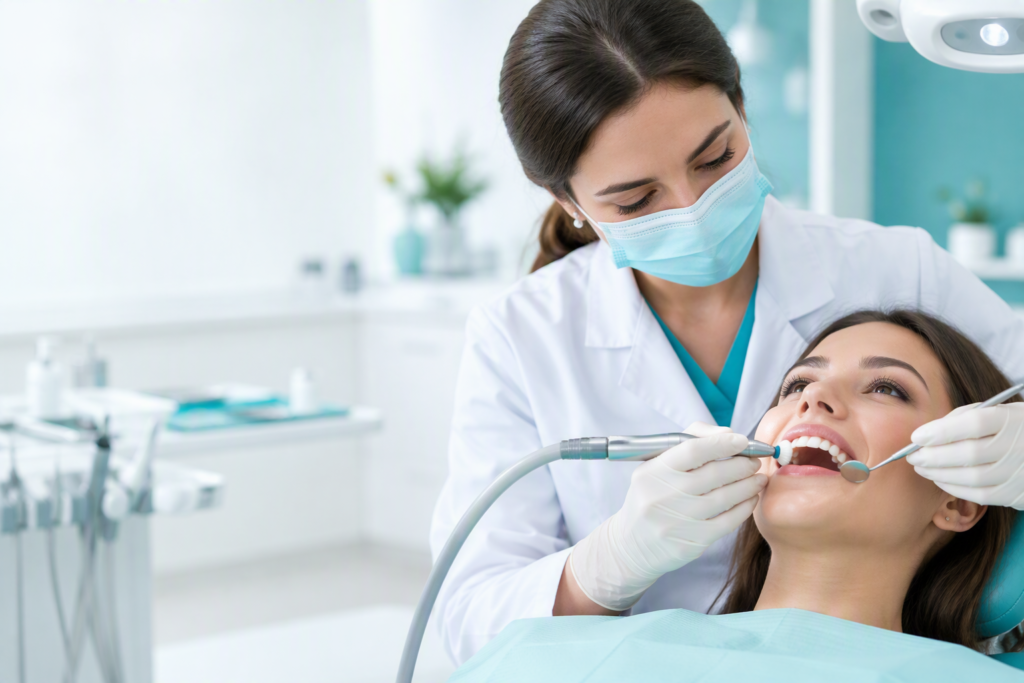
What Is Dental Scaling and Polishing?
Dental scaling is a professional cleaning procedure used to remove plaque and tartar deposits from tooth surfaces, including areas that can be difficult to clean with a toothbrush.
Plaque is a sticky layer of bacteria that continuously forms on teeth. When plaque is not adequately removed, it can harden into tartar. Once tartar has formed, brushing and flossing alone cannot effectively remove it.
Polishing is generally performed after cleaning to help remove certain surface stains and deposits and leave the tooth surfaces smoother.
Together, scaling and polishing can be an important part of maintaining good oral hygiene.
Why Do You Need Teeth Scaling?
Even people who brush their teeth regularly can develop plaque and tartar.
Tartar can accumulate:
- Along the gumline
- Between teeth
- Behind the lower front teeth
- Around areas that are difficult to reach with a toothbrush
- Around certain dental restorations or appliances
When plaque remains around the gums, it can contribute to gum inflammation. If gum disease progresses, deeper spaces or pockets can develop around the teeth, making professional treatment more important.
Professional dental cleaning allows a dentist to assess your teeth and gums and determine whether routine cleaning is sufficient or whether additional periodontal treatment is required.
What Happens During Scaling and Polishing?
The exact procedure depends on your oral health and the amount of plaque, tartar and staining present.
1. Dental Examination
Your dentist first examines your teeth and gums.
This helps determine:
- The condition of your gums
- Amount of plaque and tartar
- Presence of visible stains
- Areas that require additional attention
- Whether further dental treatment may be necessary
2. Scaling
During scaling, dental instruments are used to remove plaque and hardened tartar from the tooth surfaces.
Scaling may be performed above the gumline and, when clinically indicated, below the gumline.
3. Polishing
After scaling, polishing may be performed to remove suitable surface stains and deposits and make the tooth surfaces feel smoother.
4. Oral Hygiene Guidance
Your dentist may also advise you about brushing technique, interdental cleaning and other daily oral-hygiene practices according to your individual needs.
What Is the Difference Between Scaling and Polishing?
| Scaling | Polishing |
| Removes plaque and tartar | Helps remove surface stains and deposits |
| Focuses on deposits attached to teeth | Helps make tooth surfaces smoother |
| Important for maintaining gum health | Primarily supports a clean, smooth tooth surface |
| Performed using professional dental instruments | Usually performed after cleaning |
Benefits of Scaling and Polishing
Professional dental cleaning can provide several oral-health benefits.
Helps Remove Tartar
Once plaque hardens into tartar, professional cleaning is needed to remove it.
Supports Gum Health
Removing plaque and calculus can help control the bacterial deposits associated with gum inflammation.
Helps Reduce Surface Staining
Polishing can help remove certain external stains from the tooth surface.
Teeth Feel Cleaner
After cleaning, many patients notice that their teeth feel smoother and cleaner.
Supports Better Oral Hygiene
A professional cleaning can also help identify areas where plaque tends to accumulate and provide an opportunity to improve daily oral-hygiene habits.
Does Scaling Damage Your Teeth?
No, professional scaling does not normally damage healthy teeth when performed appropriately by a dental professional.
Some people notice temporary sensitivity after cleaning, particularly when significant deposits have been removed or when the teeth and gums already have an underlying problem.
However, persistent sensitivity or discomfort should be discussed with your dentist because it may have another cause.
Does Scaling Make Teeth Whiter?
Scaling and polishing can make teeth look cleaner and brighter when surface stains and deposits are removed.
However, scaling is not the same as professional teeth whitening.
If the natural colour of your teeth is darker or you want a significant change in tooth shade, your dentist can assess whether a whitening procedure is appropriate.
Is Teeth Scaling Painful?
For many patients, routine dental cleaning is well tolerated.
You may experience some sensitivity or mild discomfort depending on:
- The amount of tartar present
- Gum inflammation
- Tooth sensitivity
- The location of deposits
- The type of cleaning required
More extensive periodontal treatment can involve deeper cleaning below the gumline and may require additional visits or local anaesthesia depending on the clinical situation.
What Causes Plaque and Tartar?
Plaque develops naturally when bacteria, food particles and saliva interact in the mouth.
If plaque is not removed regularly, it can harden into tartar.
Common factors that can contribute to plaque accumulation include:
- Inadequate brushing
- Not cleaning between the teeth
- Frequent sugary foods and drinks
- Smoking or tobacco use
- Crowded teeth
- Poor oral-hygiene habits
- Certain dental appliances or restorations
Cleaning between the teeth is particularly important because toothbrush bristles cannot effectively reach every interdental surface.
How Can You Prevent Excessive Tartar?
Professional cleaning is useful, but your daily habits are equally important.
Brush Twice a Day
Brush your teeth twice daily using a suitable toothbrush and fluoride toothpaste.
Clean Between Your Teeth
Use dental floss or another appropriate interdental cleaner to clean areas between teeth.
Limit Frequent Sugary Foods
Reducing frequent exposure to sugary foods and drinks can support better oral health.
Avoid Tobacco
Tobacco can negatively affect oral health and gum tissues.
Visit Your Dentist
The appropriate dental check-up frequency depends on your individual oral-health needs. Your dentist can recommend a suitable schedule.
Scaling vs. Scaling and Root Planing
These procedures should not be confused.
Routine scaling and polishing is generally used to remove plaque, tartar and surface deposits during professional cleaning.
Scaling and root planing (SRP) is a deeper periodontal treatment used when gum disease requires cleaning below the gumline. It involves removing plaque and calculus from tooth and root surfaces and smoothing affected root surfaces.
Your dentist will determine which treatment is appropriate after examining your teeth and gums.
Who May Need Dental Scaling?
A professional dental cleaning may be recommended if you have:
- Visible tartar deposits
- Plaque buildup
- Stained teeth
- Bleeding gums
- Red or swollen gums
- Persistent bad breath
- Difficulty keeping certain areas clean
- A history of gum problems
However, not everyone requires the same type or frequency of dental cleaning. Your dentist should assess your individual oral-health needs.
What Should You Do After Scaling and Polishing?
After your appointment:
- Follow the oral-hygiene instructions provided by your dentist.
- Continue brushing regularly.
- Clean between your teeth daily.
- Avoid tobacco products.
- If your teeth feel temporarily sensitive, follow your dentist’s advice.
- Contact your dentist if you experience persistent pain, swelling or other unusual symptoms.
Good home care is essential for maintaining the results of professional cleaning.
Frequently Asked Questions
How often should I get teeth scaling?
There is no single schedule that is suitable for everyone. The recommended frequency depends on your oral health, plaque and tartar buildup, gum condition and dental history. Your dentist can recommend an appropriate interval.
Can brushing remove tartar?
No. Brushing and interdental cleaning can help prevent plaque from accumulating and hardening, but hardened tartar requires professional removal.
Does scaling whiten teeth?
Scaling and polishing can remove some external stains and deposits, making teeth appear cleaner. It is not the same as professional tooth whitening.
Can scaling stop gum bleeding?
If bleeding is caused by plaque-related gum inflammation, professional cleaning and improved oral hygiene may help. However, persistent bleeding should be evaluated by a dentist because gum bleeding can have different causes.
Is scaling safe for sensitive teeth?
Professional cleaning can generally be performed on sensitive teeth, but the dentist may modify the approach depending on the cause and severity of sensitivity.
Can I eat after scaling?
Your dentist may give you specific instructions depending on the procedure performed. If no special instructions are provided, follow your dentist’s recommendations regarding eating and drinking after treatment.